SPID.AspNetCore.Authentication
Affected
- introduced
0, fixed3.4.0(ecosystem)
Fixed versions
3.4.0
Fix
The export has no generic command for this ecosystem.
Advisory
Also known as: CVE-2025-24894
The AspNetCore Remote Authenticator for SPID Allows SAML Response Signature Verification Bypass
Description
Authentication using Spid and CIE is based on the SAML2 standard which provides for two entities:
Identity Provider (IdP): the system that authenticates users and provides identity information ( SAML assertions ) to the Service Provider, essentially, it is responsible for managing user credentials and identity;
Service Provider (SP): The system that provides a service to the user and relies on the Identity Provider to authenticate the user, receives SAML assertions from the IdP to grant access to resources.
The library spid-aspnetcorerefers to the second entity, i.e. the SP, and implements the validation logic of the SAML assertions present within the SAML response . The following is a summary diagram of an authentication flow via SAML:
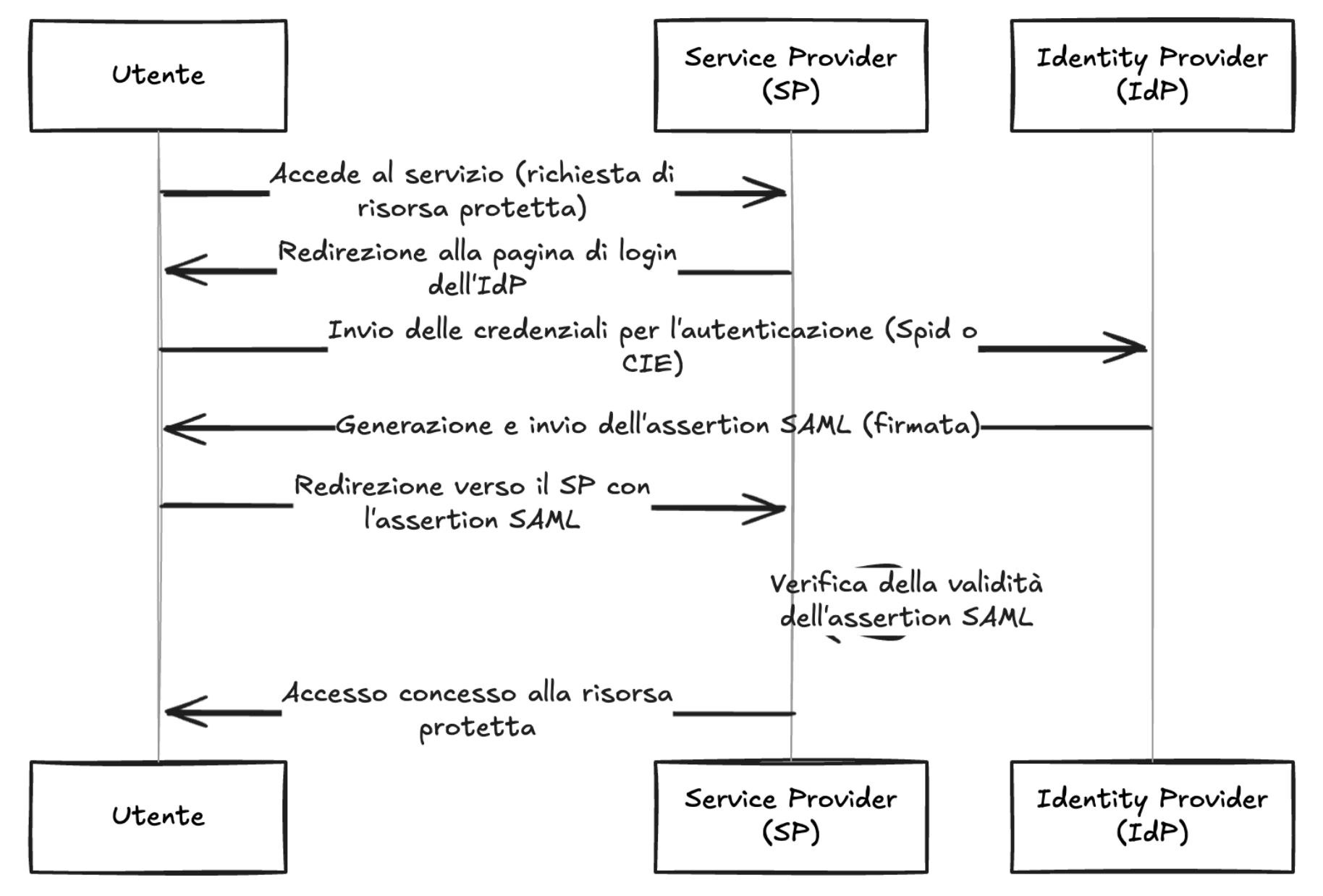
As shown in the diagram, the IdP, after verifying the user's credentials, generates a signed SAML response, this is propagated to the SP by the user's browser and the SP, after verifying the signature, can extract the data needed to build the user's session.
The signature validation logic is central as it ensures that you cannot craft a SAML response with arbitrary assertions and thus impersonate other users.
The following is the validation code implemented in spid-aspnetcore.
internal static bool VerifySignature(XmlDocument signedDocument, IdentityProvider? identityProvider = null){
    //...SNIP...
    SignedXml signedXml = new SignedXml(signedDocument);
    if (identityProvider is not null)
    {
        bool validated = false;
        foreach (var certificate in identityProvider.X509SigningCertificates){
            var publicMetadataCert = new X509Certificate2(Convert.FromBase64String(certificate));
            XmlNodeList nodeList = (signedDocument.GetElementsByTagName("ds:Signature")?.Count > 1) ?
                                    signedDocument.GetElementsByTagName("ds:Signature") :
                                   (signedDocument.GetElementsByTagName("ns2:Signature")?.Count > 1) ?
                                    signedDocument.GetElementsByTagName("ns2:Signature") :
                                    signedDocument.GetElementsByTagName("Signature");
            signedXml.LoadXml((XmlElement)nodeList[0]);
            validated |= signedXml.CheckSignature(publicMetadataCert, true);
        }
        return validated;
    }
    else{
        XmlNodeList nodeList = (signedDocument.GetElementsByTagName("ds:Signature")?.Count > 0) ?
                               signedDocument.GetElementsByTagName("ds:Signature") :
                               signedDocument.GetElementsByTagName("Signature");
        signedXml.LoadXml((XmlElement)nodeList[0]);
        return signedXml.CheckSignature();
    }
    //...SNIP...
}
The parameter signedDocument contains the SAML response in XML format, while the parameter identityProvider can contain the IdP info. If the parameter identityProvider has been specified, the public certificates of that IdP are extracted, so as to force their use during the signature verification, otherwise the certificates configured within the application are used.
Next, a response envelope is generated nodeList within which all XML elements containing an XML signature of part or all of the SAML response envelope are saved.
Finally, the first element of this list, i.e. the first signature found, is extracted and verified.
In a normal authentication flow, the SAML response looks like this (note that some fields and attributes have been omitted for ease of reading):
<samlp:Response ID="response_id" IssueInstant="2025-01-07T13:37:00Z" Version="2.0" xmlns:saml="urn:oasis:names:tc:SAML:2.0:assertion" xmlns:samlp="urn:oasis:names:tc:SAML:2.0:protocol">
    <saml:Issuer Format="urn:oasis:names:tc:SAML:2.0:nameid-format:entity">
        https://demo.spid.gov.it/validator
    </saml:Issuer>
    <ds:Signature xmlns:ds="http://www.w3.org/2000/09/xmldsig#">
        <ds:SignedInfo>
            <ds:CanonicalizationMethod Algorithm="http://www.w3.org/2001/10/xml-exc-c14n#"/>
            <ds:SignatureMethod Algorithm="http://www.w3.org/2001/04/xmldsig-more#rsa-sha256"/>
            <ds:Reference URI="#response_id">
                <ds:Transforms>
                    <ds:Transform Algorithm="http://www.w3.org/2000/09/xmldsig#enveloped-signature"/>
                </ds:Transforms>
                <ds:DigestMethod Algorithm="http://www.w3.org/2001/04/xmlenc#sha256"/>
                <ds:DigestValue>
                    <!-- DIGEST -->
                </ds:DigestValue>
            </ds:Reference>
        </ds:SignedInfo>
        <ds:SignatureValue>
           <!-- SIGNATURE -->
        </ds:SignatureValue>
        <ds:KeyInfo>
            <ds:X509Data>
                <ds:X509Certificate>
                    <!-- CERTIFICATE -->
                </ds:X509Certificate>
            </ds:X509Data>
        </ds:KeyInfo>
    </ds:Signature>
    <samlp:Status>
        <samlp:StatusCode Value="urn:oasis:names:tc:SAML:2.0:status:Success"/>
    </samlp:Status>
    <saml:Assertion ID="assertion_id" IssueInstant="2025-01-07T13:37:00Z" Version="2.0" xmlns:xs="http://www.w3.org/2001/XMLSchema" xmlns:xsi="http://www.w3.org/2001/XMLSchema-instance">
        <saml:Issuer Format="urn:oasis:names:tc:SAML:2.0:nameid-format:entity">
            https://demo.spid.gov.it/validator
        </saml:Issuer>
        <ds:Signature xmlns:ds="http://www.w3.org/2000/09/xmldsig#">
            <ds:SignedInfo>
                <ds:CanonicalizationMethod Algorithm="http://www.w3.org/2001/10/xml-exc-c14n#"/>
                <ds:SignatureMethod Algorithm="http://www.w3.org/2001/04/xmldsig-more#rsa-sha256"/>
                <ds:Reference URI="#assertion_id">
                    <ds:Transforms>
                        <ds:Transform Algorithm="http://www.w3.org/2000/09/xmldsig#enveloped-signature"/>
                    </ds:Transforms>
                    <ds:DigestMethod Algorithm="http://www.w3.org/2001/04/xmlenc#sha256"/>
                    <ds:DigestValue>
                        <!-- DIGEST -->
                    </ds:DigestValue>
                </ds:Reference>
            </ds:SignedInfo>
            <ds:SignatureValue>
                <!-- SIGNATURE -->
            </ds:SignatureValue>
            <ds:KeyInfo>
                <ds:X509Data>
                    <ds:X509Certificate>
                        <!-- CERTIFICATE -->
                    </ds:X509Certificate>
                </ds:X509Data>
            </ds:KeyInfo>
        </ds:Signature>
        <saml:AttributeStatement>
            <saml:Attribute Name="spidCode" NameFormat="urn:oasis:names:tc:SAML:2.0:attrname-format:basic">
                <saml:AttributeValue xmlns:xs="http://www.w3.org/2001/XMLSchema" xmlns:xsi="http://www.w3.org/2001/XMLSchema-instance" xsi:type="xs:string">
                    AGID-001
                </saml:AttributeValue>
            </saml:Attribute>
            <!-- ... SNIP ... -->
        </saml:AttributeStatement>
    </saml:Assertion>
</samlp:Response>Critical Basis: The source's own band: CRITICAL
0, fixed 3.4.0 (ecosystem)3.4.0
The export has no generic command for this ecosystem.
Fix commands are the export's own generic commands. Ojuju never runs them. Check them against your setup first.
Check your own computer: guard packages check
Source: GitHub Advisory Database (reviewed advisories) · CC BY 4.0